


AX is the design of delegated work, how users express intent and retain control, how agents operate effectively, and how organisations deliver outcomes reliably and profitably. It builds on UX while connecting user experience, agent design and business accountability. As software assumes more responsibility, designers must help shape what it is authorised to do, who benefits and who bears the risk. AX expands the scope of design to match the scope of what is changing.
AX is not just UX for AI
Software is increasingly capable of undertaking work that people previously performed themselves. This changes what users delegate, what products take responsibility for and how businesses deliver value. For designers, it raises a reasonable challenge: why call this Agentic Experience? Doesn’t UX already address these questions? And where does designing the agents themselves fit?
User Experience (UX) concerns a person’s experience of a product or service: whether it meets their needs, how they understand and interact with it, and the effort, confidence and satisfaction involved. In agentic systems, this includes expressing intent, supervising work and assessing results. UX remains essential, with a scope that already extends beyond interfaces into the services and systems that shape people’s experiences.
Agentic Experience (AX), as proposed here, focuses on the whole system of delegated work. It encompasses the design of agents, the conditions in which they operate and the relationships through which people entrust work to them. It connects user needs with agent capability, delegated authority and organisational accountability, including how a business delivers that work reliably and profitably.
Within this scope, agent experience concerns the interfaces, instructions, APIs, tools, runtime environments, context and feedback that enable an agent to work effectively. These conditions influence whether it understands a task, takes an appropriate action and recognises success or failure. The quality of the agent’s experience directly affects the quality, cost and reliability of the work delivered to the user.
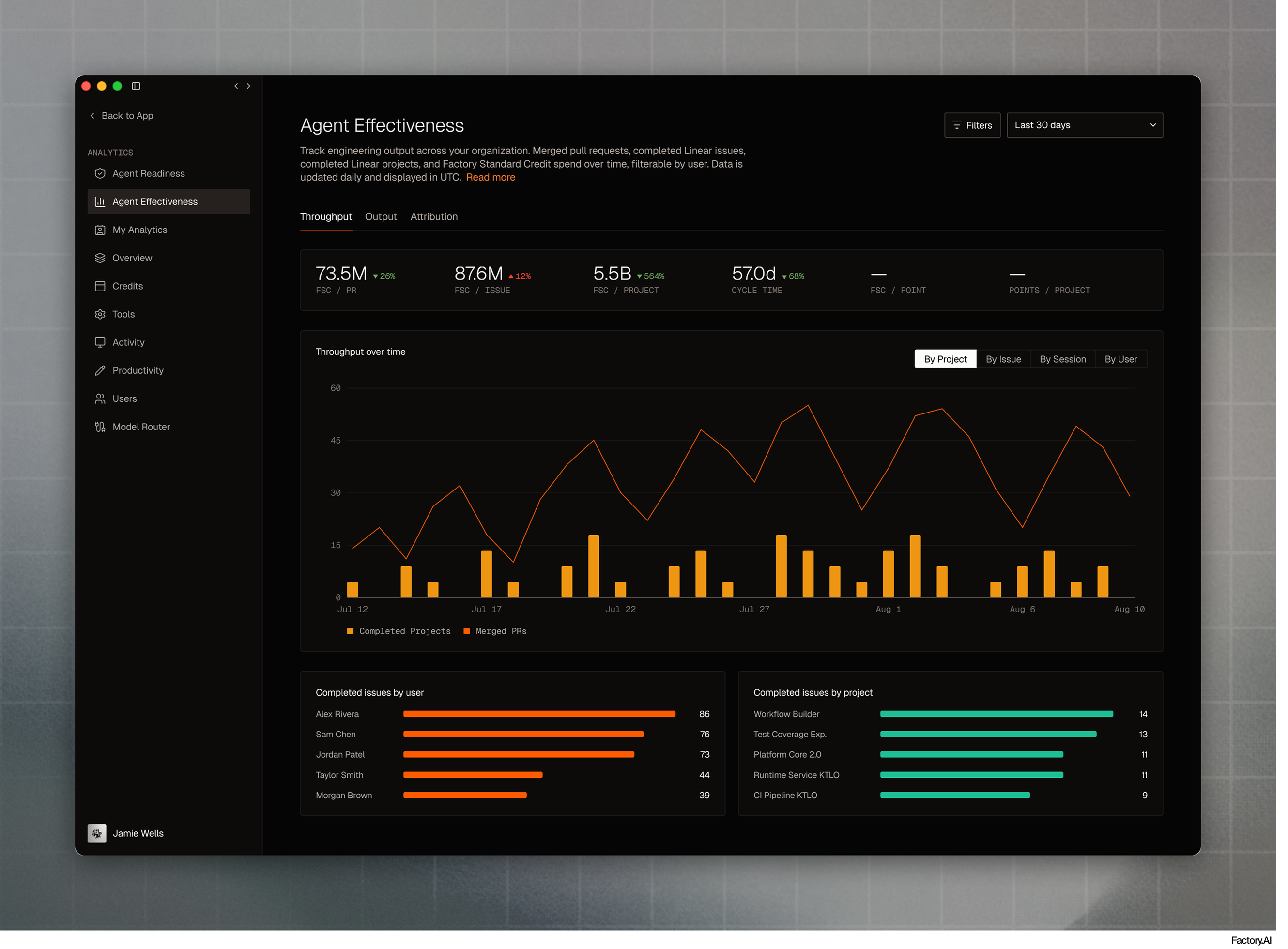
The AI native start-up Factory.AI makes these connections concrete. Its engineering agents have adjustable autonomy, approval requirements and organisational restrictions. Tools and execution feedback support the agent’s work; users need to understand its actions and manage the permissions available to them; organisational controls determine what authority can be delegated. The AX consideration is how these elements work together so that useful work is completed, oversight remains practical and accountability is clear. Factory
These are connected perspectives, not exclusive disciplinary territories. UX provides foundations for understanding and serving people. Agent design establishes capabilities and behaviour. Commercial and operational decisions determine what the product promises, how execution is supported and who bears the cost of failure. AX brings their interdependence into focus. A product may be easy to instruct yet expensive to supervise; an agent may execute effectively yet act beyond the authority its user intended to grant.
AX is therefore a proposed focus for an emerging practice. Its value must be demonstrated through better decisions about the work entrusted to software. For designers, that means participating in choices about what a product should undertake, what users should retain control over and how the resulting benefits and risks are distributed.
AX expands the scope of design to match the scope of what is changing. Making that expansion real requires influence over the products being built, the decisions shaping them and the organisations responsible for their delivery. Design has widened its remit before as technology changed the relationship between people and systems. That history provides a useful foundation for understanding what this next expansion demands.
We have been here before
The past 30 years of digital product design can be understood as a series of expansions in what designers consider their responsibility. These traditions overlap, and several began well before the web.
Human–computer interaction (HCI) established foundations for understanding how people work with computers, drawing on psychology, computing and human factors. User-centred design made people’s needs, abilities and circumstances central to the development process. Together, they helped establish that people should not have to accommodate every limitation imposed by a machine. University of London
As digital products became part of everyday life, user experience (UX) brought a broader relationship into view. The concern extended from completing an interaction to understanding the experience surrounding a product: expectations, usefulness, comprehension and satisfaction. UX was never intended to mean screens alone. Its established definition encompasses a person’s interactions with a company, its services and its products. The breadth of that ambition matters because AX builds on it. Nielsen Norman Group
Design thinking helped carry design approaches into organisational problem-solving, giving multidisciplinary teams ways to investigate needs, challenge assumptions and test possibilities. Frameworks such as the Double Diamond, shared by the Design Council from 2004, made that approach easier to communicate and adopt. Service design widened attention to the people, processes and operational arrangements behind an experience. A frustrating interaction could be understood as the consequence of a policy, a handover or an organisational boundary. Design Council
As digital delivery grew, design systems and design operations addressed another problem: how to sustain quality and consistency across many products and teams. Each development gave designers additional ways to influence what organisations produced. The underlying movement was towards a more complete understanding of the conditions that create an experience. These various methods became useful because they helped designers work at that expanding scale.
The work of design, the design of work
Agentic software brings another set of conditions into focus. When a system can undertake work, designers must help determine how responsibility passes between the person and the product.
Arcads, an AI-native platform for producing, editing, localising and scaling video adverts illustrates this in creative production. Its advertising agent, Mark, selects AI actors, assembles scenes, stitches clips and adds subtitles to produce finished adverts. Activities that previously required a sequence of production tasks can increasingly be delegated through a brief. Arcads
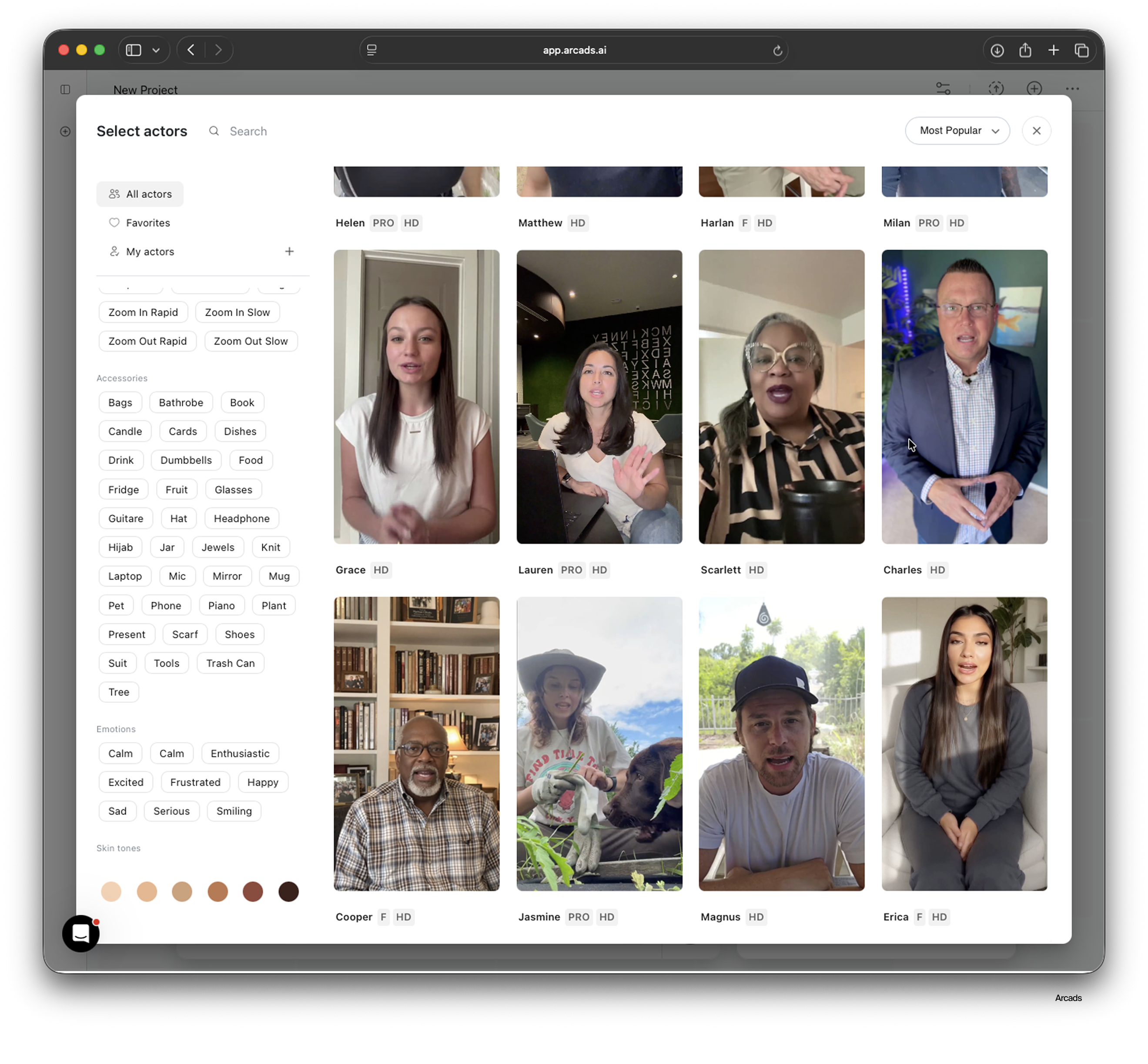
The creative team must still determine whether the result communicates the right message, represents the product accurately and is appropriate for its audience. Through an AX lens, the design challenge includes helping people express creative intent, compare alternatives and decide what is ready to publish.
Producing more material can reduce execution effort while increasing the burden of selection and review. The quality of delegation depends on how well the product supports the judgement that remains human.
A human-centred practice therefore remains the starting point. We need to understand what people want to delegate, what they need to control and what would give them confidence in the result. We must also consider people affected by the system who never directly configure it.
An AI customer-service agent acts for a business, but its behaviour affects the caller seeking help and the employee who may inherit an unresolved case. The person instructing the agent is only one of the people whose needs matter.
Retell AI, which provides infrastructure for the of production voice and chat agents, makes this wider relationship tangible. Its voice agents support warm transfers that confirm a human has answered and can privately provide the receiving employee with caller context before connecting the call. That capability addresses an important part of the experience: what happens when responsibility passes from software to a person. The design task includes determining when a transfer is appropriate and what the employee needs to know to continue effectively. Retell
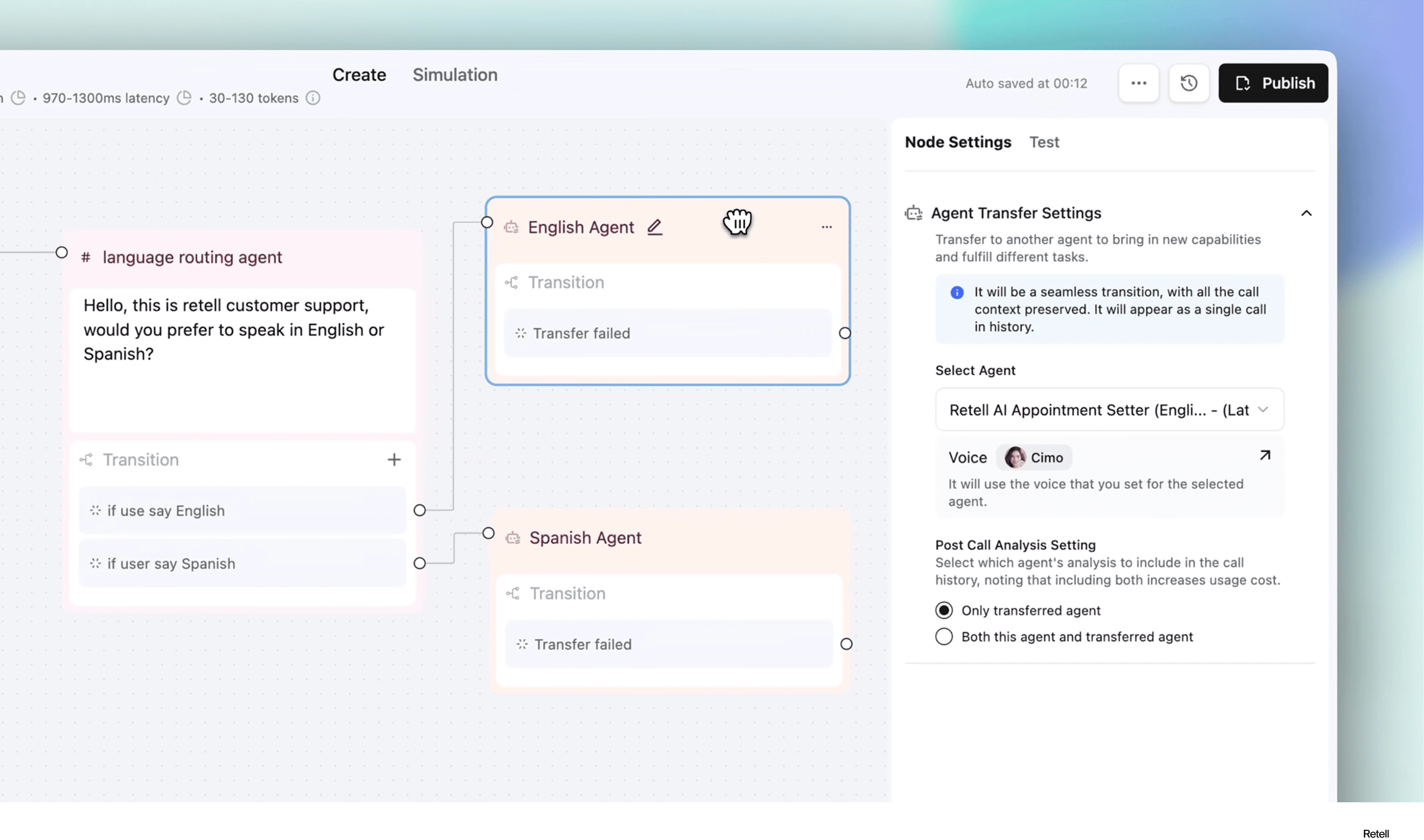
This is where trust and empathy become operational. A reassuring voice has limited value if a caller cannot reach help or must repeat everything when they do. Trust depends on the system acting within understood boundaries and supporting recovery when it reaches them. Empathy requires attention to the whole arrangement: the person asking for help, the employee taking over and the information and authority each needs.
The business value of AX
The economics of that arrangement shape its human consequences. Retell’s voice-agent pricing is based on minutes, making usage cost and successful resolution distinct measures. For a business deploying such a system, the relevant economic question extends beyond the price of a call to the cost of resolving the customer’s need, including any escalation or repeat contact. This creates a design consideration: reducing conversation time is useful only if the customer still receives an adequate resolution. Retell
Creative production presents a related question. A team using Arcads may be able to generate more advertising variations with less production effort, but someone must still assess their suitability and decide which deserve testing. The economic benefit depends on the whole workflow, including briefing, generation, review, revision and approval. Output volume alone cannot tell us whether the team has gained productive capacity or simply moved its bottleneck.
Designers therefore need to understand how value is created, what delivery costs and where those costs fall. A product can save its provider money while increasing the customer’s effort. It can complete a task quickly while transferring the burden of verification to someone else. If routine work is delegated to agents, employees may inherit a concentrated workload of difficult exceptions. Pricing, performance measures and staffing decisions all influence the experience we are trying to improve.
Commercial understanding also makes design’s contribution more effective. Clearer intent can reduce unnecessary execution. Better review mechanisms can prevent costly errors. Appropriate boundaries can make a product dependable enough for customers to delegate more valuable work. Human needs and business viability meet in these decisions. It is the designer’s task is to make that relationship explicit and shape it deliberately.
Big design demands a big practice
Magic Patterns, a AI design and prototyping tool for product teams that turns text into visual interfaces and production-ready code, offers a useful example for designers wondering where familiar practices fit. It generates prototypes and can incorporate an existing design system. The design system consequently becomes a source of constraints for delegated production, alongside its role in helping people design and build consistently. But conformity to a component library does not establish that a generated design solves the right problem. Research, interaction design and critical judgement remain necessary to assess what the system produces. Magic Patterns

The same principle applies to other established design methods. A service blueprint can expose where an agent acts, where responsibility changes hands and where exceptions accumulate. Research can examine whether people understand the permissions they grant and can meaningfully supervise the resulting work. A design system can establish consistent ways to communicate uncertainty, request approval and show the status of an action. Existing practices can develop to address the new division of AX based labour.
Designers also need to participate where the underlying choices are made. That includes deciding what work a product should undertake, what constitutes an acceptable result, how much human review is necessary and what happens when execution fails. Factory’s controls make delegated authority explicit; Retell’s transfers support a return to human assistance; Arcads changes the relationship between production and creative judgement; Magic Patterns brings design systems into generated work. Each example connects an experience decision to the way work is organised.
We need enough fluency in models, evaluation, operating costs and organisational incentives to work effectively with engineering, operations, finance and risk. We earn that wider remit by helping resolve these questions. AX gives the work a focus: designing systems of delegation that people can use confidently and organisations can deliver responsibly.
Calling a few good designers
We need a vanguard of designers willing to take this broader responsibility into practice. Designers who can connect human needs to technical capability and commercial reality; who can question whether work should be delegated as carefully as they design how delegation happens; and who can help organisations distinguish productive automation from the transfer of effort and risk to someone else.
This is an opportunity to influence the design of work while its boundaries are being redrawn. The choices being made now will determine who exercises judgement, who retains control and how the benefits of increased capability are distributed. Design has a contribution to make wherever those choices affect people.
If AX expands the scope of design to match the scope of what is changing. Our responsibility is to make that expansion real, in the products we build, the decisions we influence and the organisations we help re/design.
.