


Buying intelligence is becoming easier. Turning it into dependable, profitable work is the business.
We used to buy software to help us do our work. We now buy work performed by software. Behind that change is another: companies can now acquire important parts of the intelligence required to deliver their products from external providers, then build a business around how that intelligence is applied.
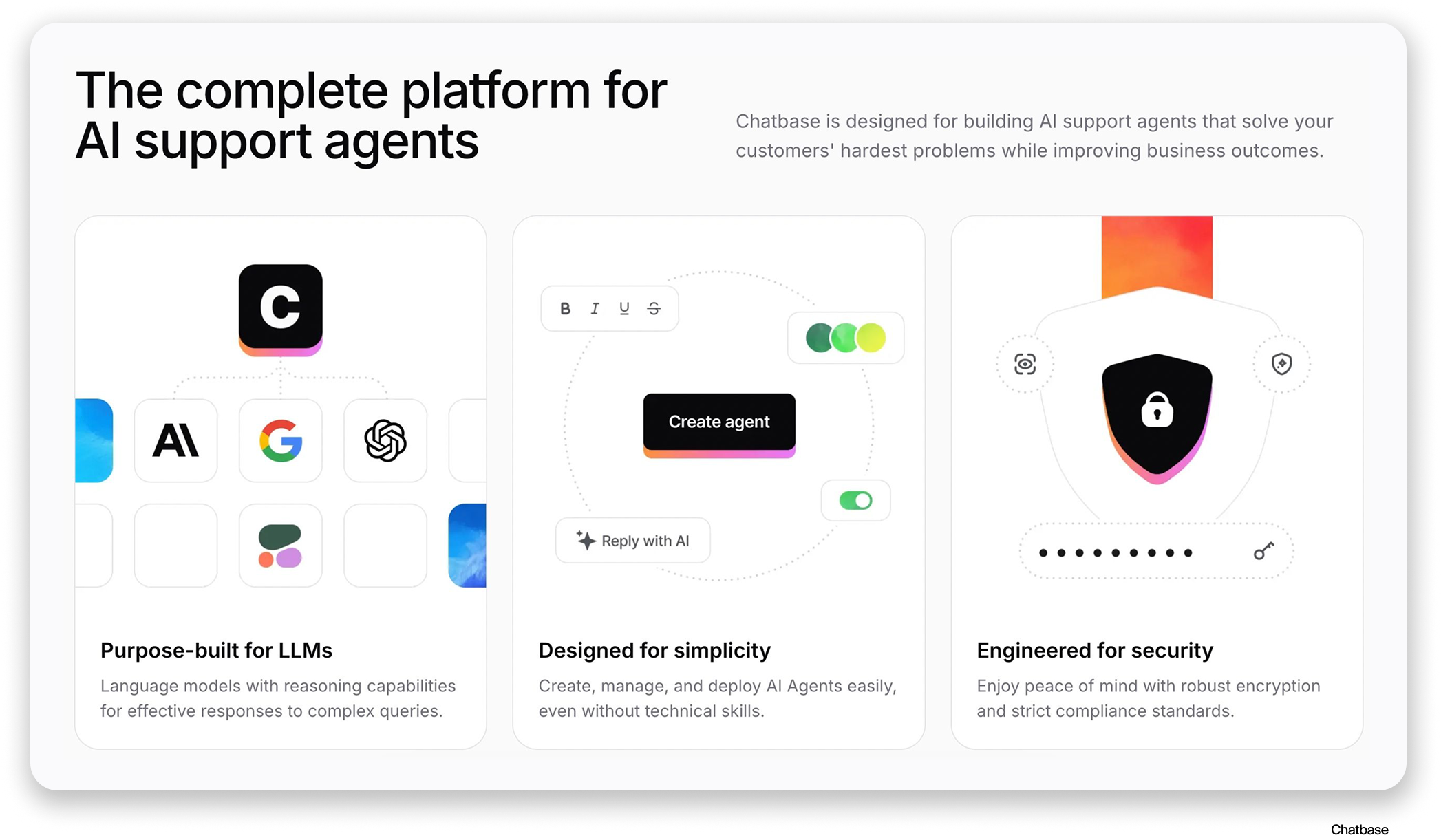
Chatbase offers customer service agents using models from providers including OpenAI, Anthropic and Google. Its product brings those models together with company information, integrations and tools for deploying and managing agents. Retell combines language models, voice technology and telephony with its own infrastructure for running conversations. Both turn externally available capabilities into services customers can configure, deploy and pay to use. Chatbase, Retell
Software companies have long rented infrastructure and incorporated other companies’ technology. What changes here is the capability being acquired: intelligence that can interpret a request, make intermediate decisions and contribute to execution. Product teams will still have substantial engineering and operational work to do. But it can concentrate that investment on a particular customer problem rather than developing every underlying capability itself.
This changes where value is created and captured. Access to a capable model is available to competitors. Understanding the customer’s circumstances, coordinating the necessary systems and delivering useful work reliably require a more specific product and operating model.
The commercial opportunity lies in converting available intelligence into work that customers are willing to entrust to the product.
That is the territory of Agentic Experience. AX encompasses the agents, their operating conditions and the relationships through which people delegate work to them. Decisions about that arrangement determine what can be sold, what it costs to deliver and how much responsibility the product can credibly assume.
From selling access to supplying work
In a familiar SaaS model, a customer pays for employees to access software that helps them perform their jobs. A support platform, for example, gives a team the tools to manage enquiries, find information and record resolutions. Employees supply the judgement, effort and coordination required to resolve the customer’s problem. The subscription buys access to the application; the customer separately funds the people and processes that turn that access into completed work.
Agentic products bring more of that execution into the purchase. A customer can buy capacity to handle enquiries, apply policies and carry out authorised actions. People still establish objectives, supply context and manage exceptions, but the software assumes part of the workload. The billing format may remain a monthly subscription, with seats, usage allowances or platform fees. What changes is the responsibility the product takes on in return for that payment.
This changes the purchasing calculation. Customers must assess how much work the product completes, how quickly and to what standard, alongside the human effort still required. The subscription price becomes one component of the total cost of delivery, including setup, supervision, escalation and correction. A cheaper product that requires extensive checking may offer less value than a more expensive one that reliably completes the task.
It also changes how the provider can grow. A seat-based product typically earns more as additional employees gain access. An agentic product can earn more as customers delegate more work, even when the number of people supervising it stays the same. Agent design helps determine whether that growth is economical. An agent that recognises errors, recovers effectively and seeks human help at the appropriate point can reduce wasted execution and unnecessary supervision. These are core AX decisions: they shape how acquired intelligence becomes dependable work and what it costs to deliver.
The AX value chain
That transformation involves several stages. Model and infrastructure providers supply the underlying intelligence. The product combines it with the customer’s objective and relevant context, then equips agents with the tools and permissions needed to act. During execution, feedback allows agents to assess progress, correct mistakes or request human intervention. The result must then be checked against the task’s requirements. Value accumulates through this chain as general capability becomes completed work the customer can use.
Manus makes this progression tangible. Its Browser Operator can work within a customer’s existing browser session, accessing authorised research subscriptions and business systems to cross reference information, conduct analysis and compile reports. The customer authorises the session and can monitor, interrupt or take over execution. The product brings intelligence into the environment where the information and tools needed for the task already reside. Manus
Consider using that capability to prepare a competitor analysis. The brief establishes which companies and questions matter; access to subscribed research supplies context; browser actions gather the evidence; and synthesis turns it into a report. Verification then requires checking that the sources support the conclusions and that the report answers the brief. Producing a document alone does not establish success. Customer value comes from obtaining a useful analysis with less total effort, including the time spent directing and checking it. The commercial opportunity lies in making that whole sequence dependable enough to delegate.
Businesses can capture value at different points in this chain. OpenRouter, for example, provides access to external models through a common interface, with routing, usage tracking and fallbacks. It passes through provider inference prices and charges a fee when customers purchase credits; its published pay-as-you-go platform fee is 5.5%. Its commercial contribution lies in making intelligence easier to acquire and operate across suppliers. OpenRouter, OpenRouter
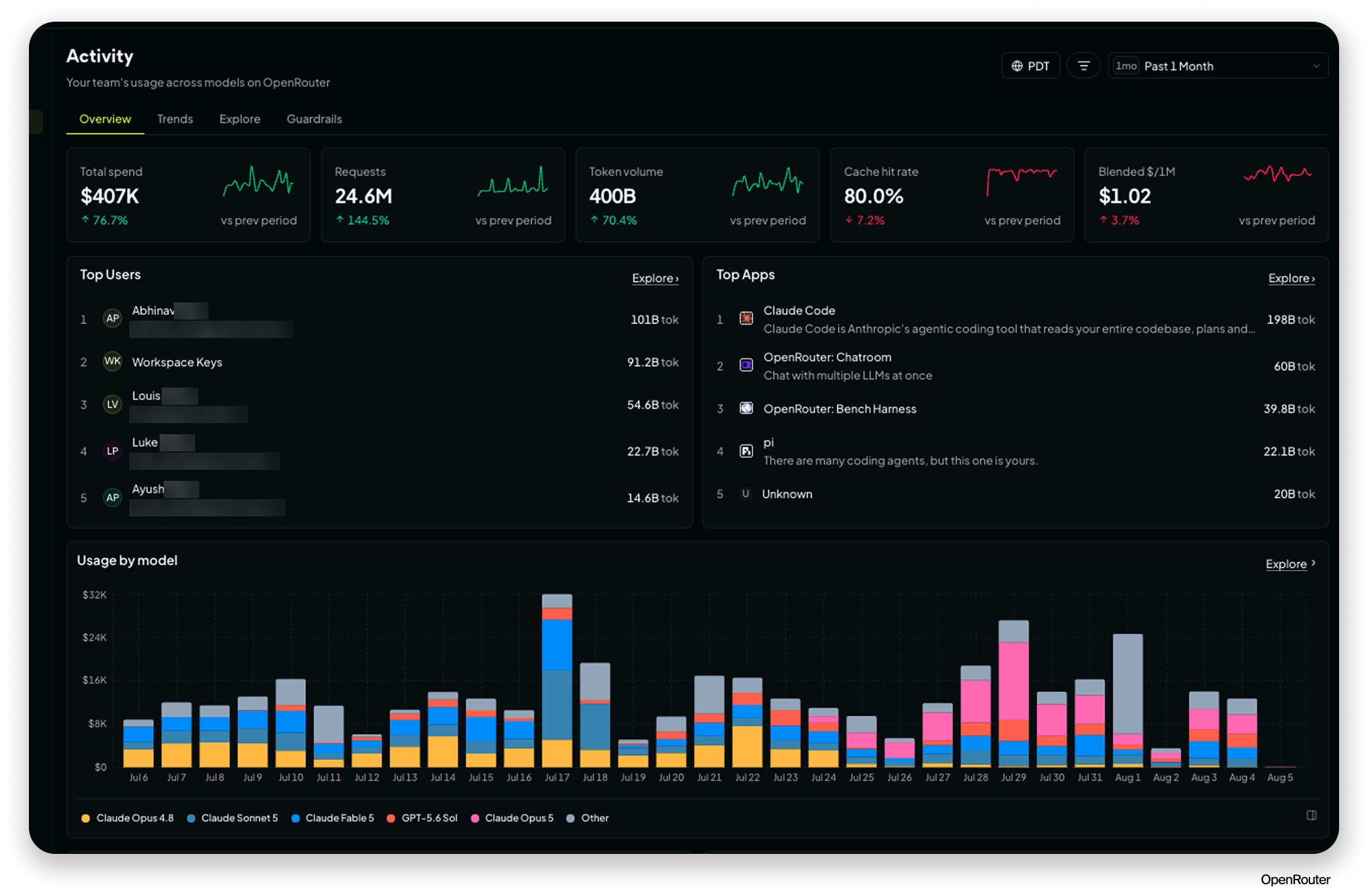
OpenRouter and Manus illustrate two different places to build a business in this value chain. OpenRouter charges for making external intelligence accessible and manageable. Manus packages intelligence with tools and an execution environment so customers can delegate tasks such as research and report preparation. For each, the commercial test is whether customers will pay more for the work delivered than it costs to acquire the intelligence, execute the task and handle exceptions.
AX shapes both sides of that equation through decisions about how work is requested, executed and checked. In the competitor analysis example, clarifying the brief before research begins can reduce irrelevant searches, unnecessary model calls and customer rework. Presenting conclusions alongside supporting sources can make the report easier to verify and reduce follow-up requests. Those decisions affect both how much effort the customer saves and how much the product spends delivering an acceptable result.
What’s the customer paying for?
The differences become tangible in the charging unit. A minute, a message credit and a completed resolution each represent a different commercial promise.
Retell charges for voice-agent usage by the minute. Its pricing separates components including voice infrastructure, text-to-speech and the language model. The customer is purchasing the capacity to run conversations, with costs affected by the chosen configuration and duration. Retell captures value through the infrastructure and services that make those conversations possible. Retell
Chatbase packages agent capacity into subscriptions. At its published monthly prices, the Standard plan includes 4,000 message credits for $150, with additional credits available through automatic recharge. Credit consumption varies by model, so an allowance does not necessarily correspond to the same number of responses in every configuration. The package combines access, functionality and a metered amount of execution. Chatbase, Chatbase
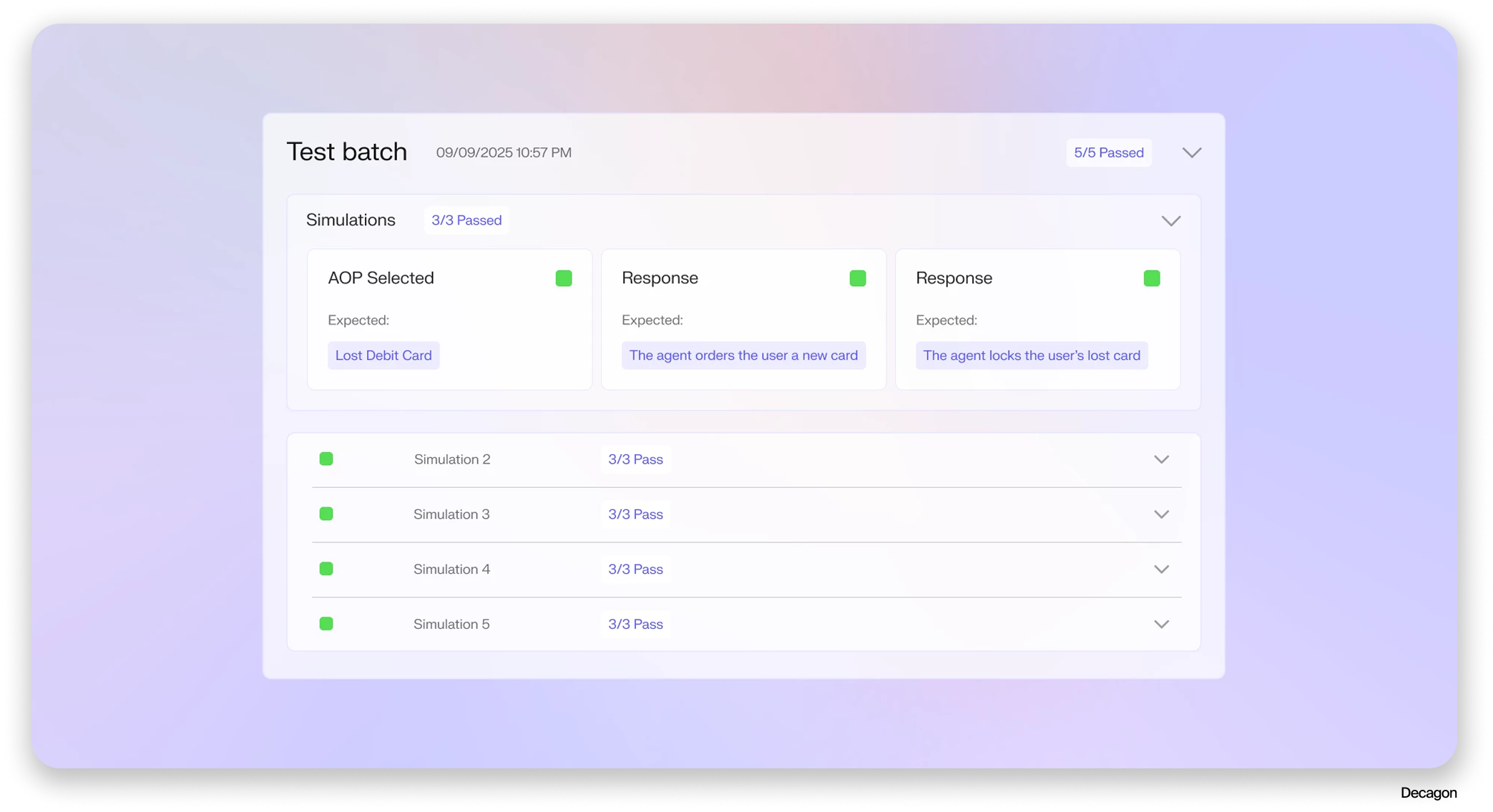
Decagon has described two alternatives for its customer service agents: charging per conversation, or charging a higher rate for a fully resolved conversation with no charge for escalations. In its published explanation, it reported that most customers preferred per-conversation pricing because it was easier to predict and avoided disputes about what qualified as a resolution. Decagon
Choosing between these mechanisms requires understanding the delegation itself. Can the customer reasonably predict how many minutes or messages a task will consume? Can they control that consumption without supervising every step? Can both parties recognise when the work is complete? AX makes these questions part of the pricing decision because they determine whether the charge feels understandable, controllable and justified.
Usage pricing is easier to justify when customers can select the configuration, anticipate consumption and set spending limits. It becomes harder to justify when an agent independently chooses how many steps to take and the customer pays for its retries. A credit allowance can make expenditure predictable, but customers still need to understand how much useful work it buys and what happens when it runs out. Outcome pricing can align payment with completed work, provided success can be clearly defined and verified. Otherwise, the product risks turning an unresolved customer need into a disputed bill.
The experience must therefore support the chosen commercial promise. Charging by usage requires visibility and budget controls. Charging by resolution requires evidence of completion and clear treatment of escalation, failure and reopened cases. These are product capabilities that make a pricing mechanism workable.
AX contributes to choosing the mechanism by establishing what responsibility the product can credibly assume and what uncertainty the customer is prepared to retain. The resulting price must cover delivery costs, but the charging unit must also reflect a delegation the customer understands and accepts.
AX decisions are margin decisions
Once execution consumes paid intelligence and external services, product behaviour affects delivery cost directly. An unnecessary question can extend a voice call. Poor context can trigger repeated attempts. A task routed to an unsuitable model can generate apparently inexpensive output that requires expensive correction.
The customer experiences these failures as delay, repetition or extra supervision. The provider experiences them as consumption, support demand or lost trust. Improving the experience can therefore improve the economics of delivery, provided the improvement reduces total effort rather than simply moving it elsewhere.
Consider a hypothetical service charging £2 for a completed task. If direct execution costs £0.40 and the average cost of retries and human exceptions adds another £0.60, £1 remains before other business expenses. If poor task definition causes those additional costs to double, that contribution falls to £0.40. The selling price has not changed. The ability to understand, execute and recover has changed the economics.
This makes the cost per accepted result more informative than the cost of an individual model response.
It includes the attempts that fail and the intervention required to make the work usable. On the customer’s side, the equivalent measure includes briefing, supervision, checking and correction. A product can be profitable for its provider while leaving the customer with too much effort to justify renewal.
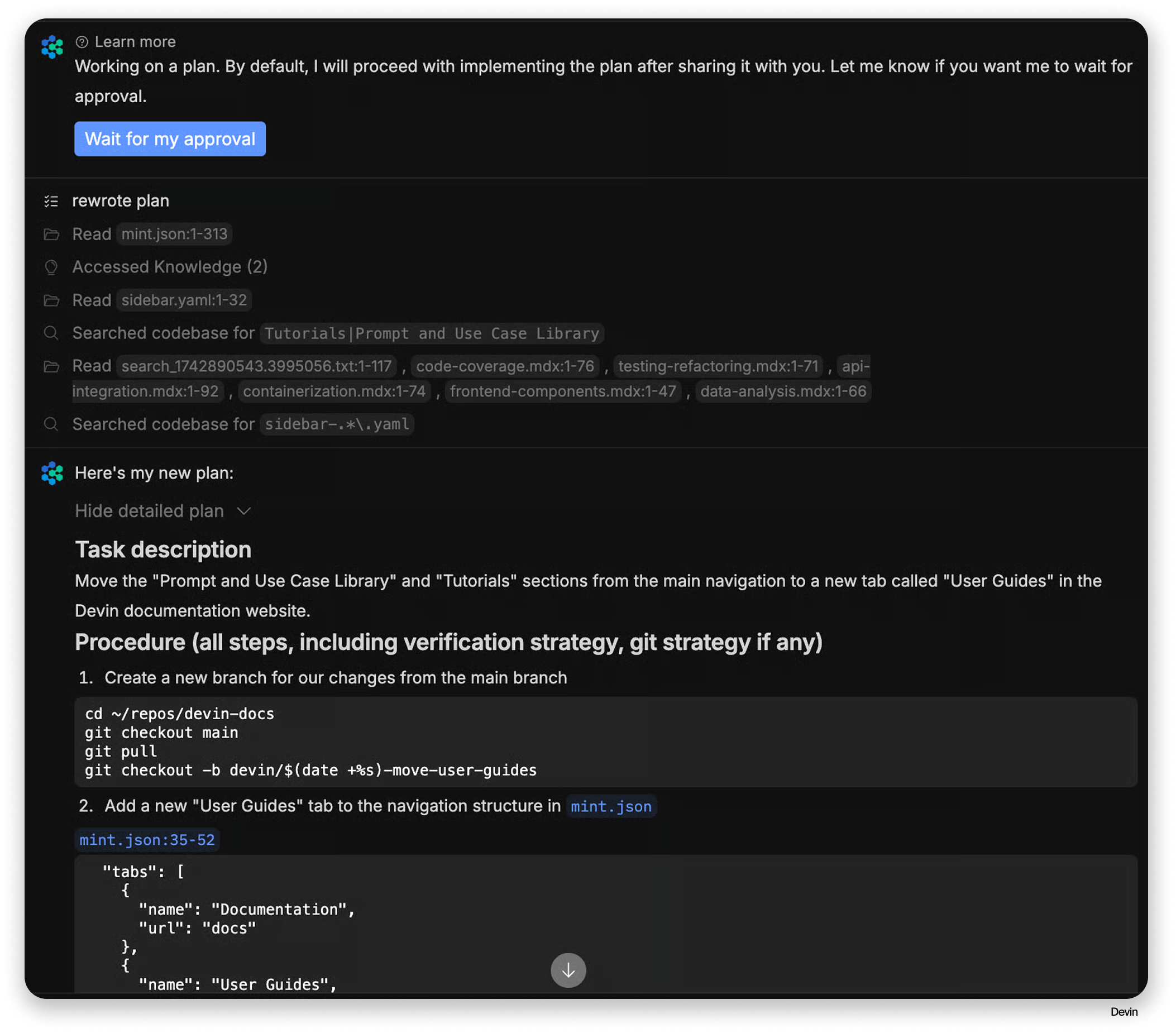
AX connects customer value with delivery performance through practical decisions about how agents work. Devin’s interactive planning, for example, identifies relevant code, raises implementation questions and presents a plan that the user can adjust before coding begins. This creates an opportunity to correct misunderstandings before they become unnecessary execution and rework. Its documented test-generation workflow also returns proposed changes with a coverage summary, giving reviewers evidence to assess rather than simply declaring the task complete. Devin, Devin
Retell addresses the point where execution passes back to a person. Its warm-transfer feature can check that a human has answered and privately provide the receiving employee with caller context. That can spare customers from repeating themselves and reduce the employee’s effort in reconstructing the problem. These features show how clarification, verification and handover can improve the experience while reducing avoidable work. Their economic value depends on whether the effort they save exceeds the time and resources they add. Retell
Context and authority define delegation
A product’s commercial scope depends on what it knows and what it is authorised to do. Retrieving a policy, applying it to a customer’s circumstances and executing a decision represent progressively greater responsibility. AX makes that progression workable by establishing how context is maintained, authority is granted and exceptions return to human judgement.
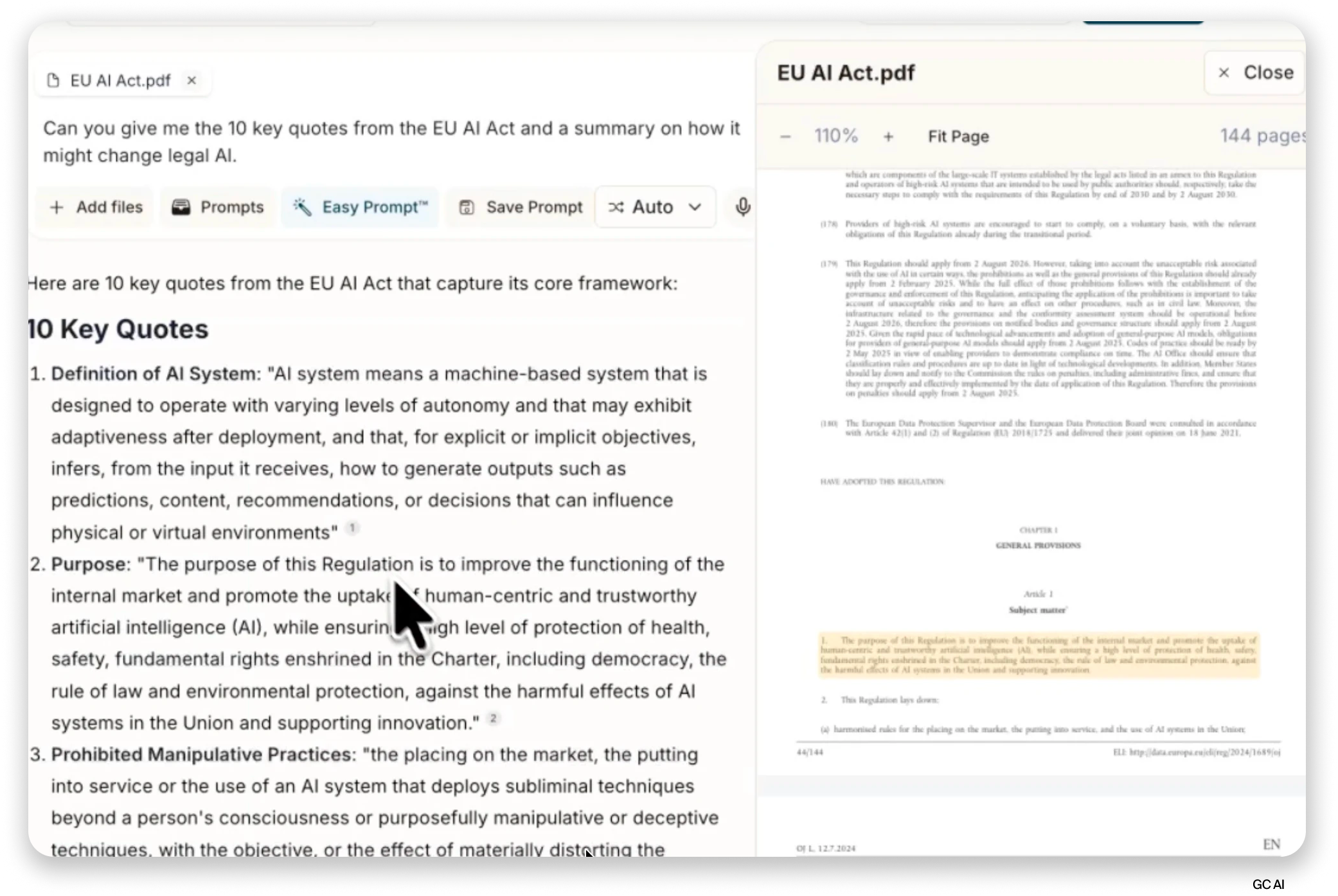
GC AI’s Playbooks illustrate this in legal work, applying company-specific standards and preferred positions to contract review. The AX consideration is how legal teams establish those positions, keep them current and understand when a case requires their attention. Making those responsibilities practical can reduce repeated instruction and checking, increasing the amount of useful work the team can delegate. GC AI
Permissions determine how far that delegation can go. Too many approval requests return routine work to the customer; too few can expose them to decisions they never intended to delegate. AX connects agent behaviour with meaningful human control, allowing the product to assume greater responsibility where its context and reliability justify it. The commercial benefit is more work delivered with proportionate oversight and manageable risk.
Measuring AX
Experience work has often had to defend its budget through improvements in usability, satisfaction and engagement. When treated as a discretionary layer of quality, it becomes vulnerable to cuts.
With agentic products, decisions about the experience reach directly into the production and sale of work. How a task is understood, what an agent can execute and when a person must intervene affect the capacity the business can sell and the cost of supplying it.
AX’s contribution can therefore be measured across several dimensions. For customers, the measures include time to an acceptable result, quality of completion and effort remaining after delegation. For products, they include delivery cost, retries, human intervention and margin.
Commercially, the question is whether better delivery leads customers to renew, delegate more work or entrust the product with a broader range of responsibilities. Reliability and control matter throughout, growth that brings more unauthorised actions, disputed results or costly recovery may destroy the value it appears to create.
These measures need to be read together. Fewer escalations are valuable only if issues are still resolved correctly. Faster execution matters only if it does not increase checking and correction. More usage may represent stronger demand, or an agent struggling through repeated attempts. A defined task provides a practical basis for comparison, product teams can assess the same kind of work before and after a change, including its quality, total cost and human effort. That makes it possible to test whether an AX decision improved the economics rather than merely moving the burden.
The opportunity extends beyond efficiency. Clearer permissions can make a previously unacceptable task safe enough to delegate. Better context can enable a more specialised service. Stronger evidence of completion can support a commercial promise the provider could not previously make. AX generates business value when it improves existing delivery or expands the work the product can credibly undertake. Its contribution should be measured through those results.
Owning the promise
Those results give substance to the product promise. A customer buys an expectation that particular work will be completed to an agreed standard, within understood limits, with a clear response when something goes wrong. The product’s positioning, price, agent behaviour and human support must all sustain that expectation.
External intelligence makes it possible to assemble substantial capability without owning every component. It also leaves the business exposed to suppliers changing their models, prices and terms. The organisation must preserve the quality of its service through those changes. That requires ownership of context, evaluation, permissions and exceptions, alongside the ability to adjust how work is delivered. Renting capability does not transfer accountability for the customer’s result.
AX connects that operating responsibility to what the customer experiences. If an agent requires help, the handover must preserve the work already done. If performance falls short, the business must be able to recognise the failure and put it right. If customers entrust it with more consequential tasks, its controls and delivery capacity must support the greater responsibility. The experience is where the commercial promise is fulfilled, qualified or broken.
Practising AX therefore means following decisions through to their consequences for customers and the business. It requires connecting an understanding of human needs with agent behaviour, delivery economics and organisational responsibility and using evidence from completed work to improve all four.
As industrial strength intelligence becomes more widely available, the ability to organise it into a service worth buying becomes increasingly important.
The business value of AX lies in making more work worth delegating, more delivery economically sustainable and the product’s promise dependable enough to build a business around.