


TL;DR
The AX Shift moves software from tools people operate to systems they delegate work to. It changes what customers need and what they pay for, how providers deliver work profitably and how organisations divide responsibility between people and software. Product leaders must now re/design their products and businesses around reliable execution, human oversight and the economics of outcomes. AX is how they do it.
The AX Shift
The economics of software are changing. For the past 30 years, we bought software to help us do our work. Now we buy work performed by software.
You express an objective, establish boundary conditions and review the result. As more execution passes to the system, the basis of value changes. You start to judge a product by the work it completes, the supervision it requires and the outcome it delivers.
This transition from operating software to delegating work is the AX Shift.
AX, or Agentic Experience, is how agency is allocated between people and intelligent systems. It begins with understanding people’s needs, goals and circumstances. What do they want to delegate, what do they want to control, and what would give them confidence in the result? Designing for AX means helping people express intent, clarify misunderstandings and intervene when necessary. The economic value of delegation depends on that human experience. Software creates little benefit if supervising it is harder than doing the work.
These human needs shape the responsibilities a product can usefully assume, and the business required to deliver them. Transferring work to software also changes costs, accountability and customer expectations, extending AX beyond the traditional remit of interface, service and user experience design. Product leaders must now decide what their software will undertake, how people will direct and supervise it, how to deliver that work profitably and how to organise the business behind the promise.
The Big Boom
Since 2023 we’ve been experiencing the Big Boom, which is the rapid expansion of investment and valuations in AI, the proliferation of AI-powered software, and the growing range and complexity of work agentic systems can perform.
By the second half of 2026, the Big Boom was visible in the speed at which AI-native companies were building substantial businesses. Lovable, the AI application creation platform that turns natural-language instructions into functioning software, reported reaching a $500 million annualised revenue run rate in June. Sierra, which provides customer-service agents that resolve customer issues across channels, confirmed in August that it had reached $200 million ARR in nine quarters, doubling its earlier milestone in just two quarters. These companies sell different capabilities, software creation and customer service, but their growth demonstrates demand for products that undertake meaningful parts of the customer’s work. TechCrunch, Sierra
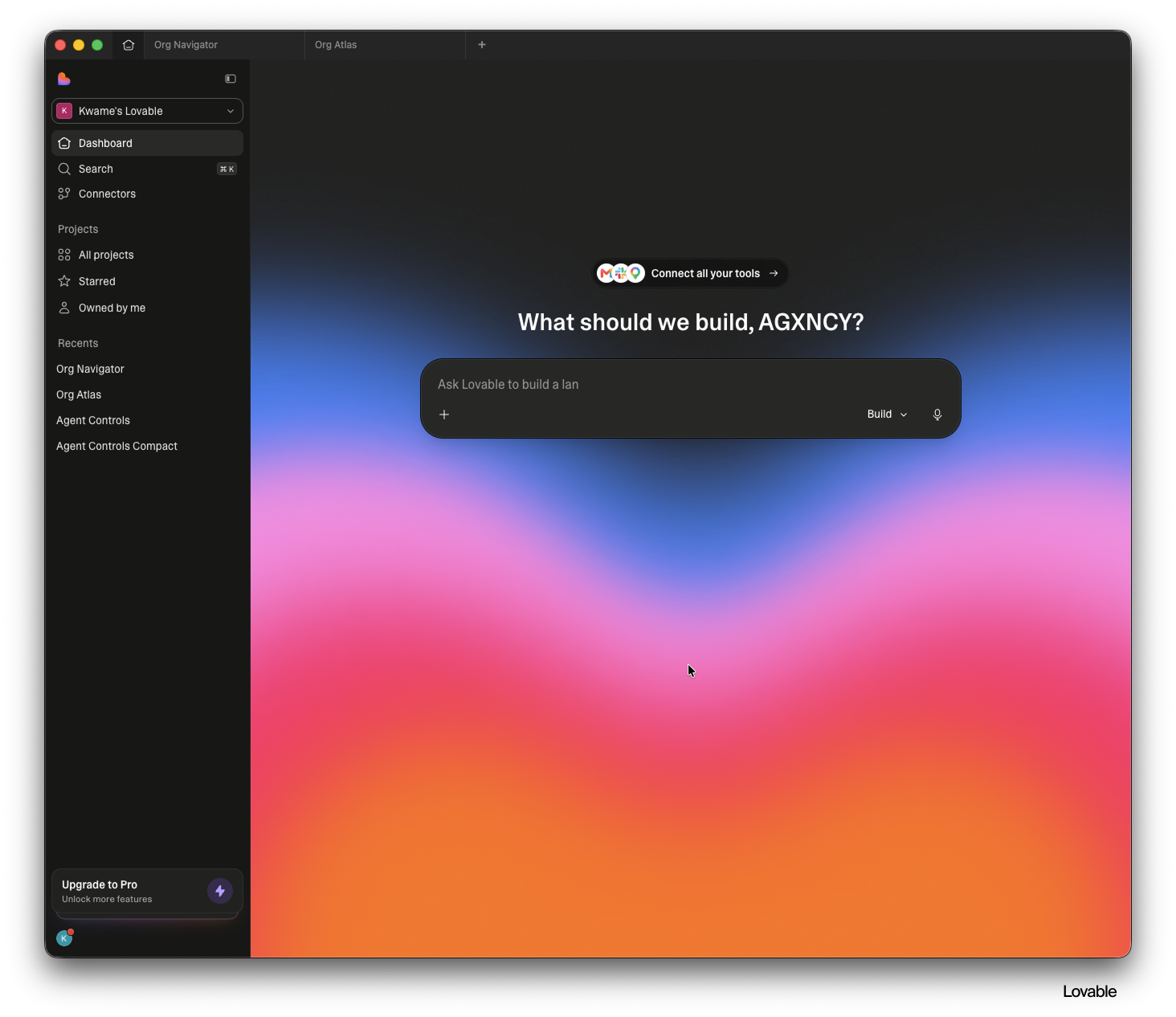
The scale extends beyond revenue. By August, Lovable reported more than 60 million projects created and over 900 million monthly visits to applications built on its platform. Its customer examples also reveal a potentially disruptive economic consequence, they claim one of their customers, Nursa, was retiring ten SaaS systems as teams built their own tools. While one company’s experience cannot establish a market-wide trend, it illustrates how delegated software creation can change the decision to build or buy, and put existing software revenues under pressure. Lovable
Investors are assigning extraordinary value to the intelligence suppliers behind this market. Anthropic’s May funding round valued it at $965 billion; OpenAI’s March round valued it at $852 billion. Those valuations encompass much more than coding, but coding agents provide concrete evidence of commercial demand: Claude Code had already exceeded $2.5 billion in annualised revenue by February. The economic significance lies in the work these products can absorb. As customers delegate implementation, service and other tasks, software companies can compete for spending previously committed to performing that work. The AX Shift is the challenge of turning that opportunity into dependable products and sustainable businesses. Anthropic, OpenAI, Claude Code
The capability to perform work is improving alongside that expansion. Stanford’s 2026 AI Index records agent success on WebArena’s realistic web tasks rising from approximately 15% in 2023 to 74.3% in early 2026.
These are benchmark results, not guarantees of production reliability, just as a generated project is not necessarily a viable product. But the strategic direction is significant, software is becoming easier to create while gaining the capacity to undertake more demanding tasks. As implementation becomes more accessible, competitive advantage increasingly depends on choosing valuable work, understanding its context and completing it dependably. Stanford AI Index 2026
Lovable illustrates both sides of this change. Its customers can describe an application and delegate much of its implementation, inspecting and steering the result as it develops. The product reduces the work required to turn an intention into functioning software. Its value therefore rests partly on the quality of the application produced and partly on how little effort the customer must expend getting there. Ease of expressing intent, resolving ambiguity and correcting direction becomes economically consequential: every failed interpretation consumes time and resources on both sides.
The product as work
When software undertakes a task, the product’s promise expands.
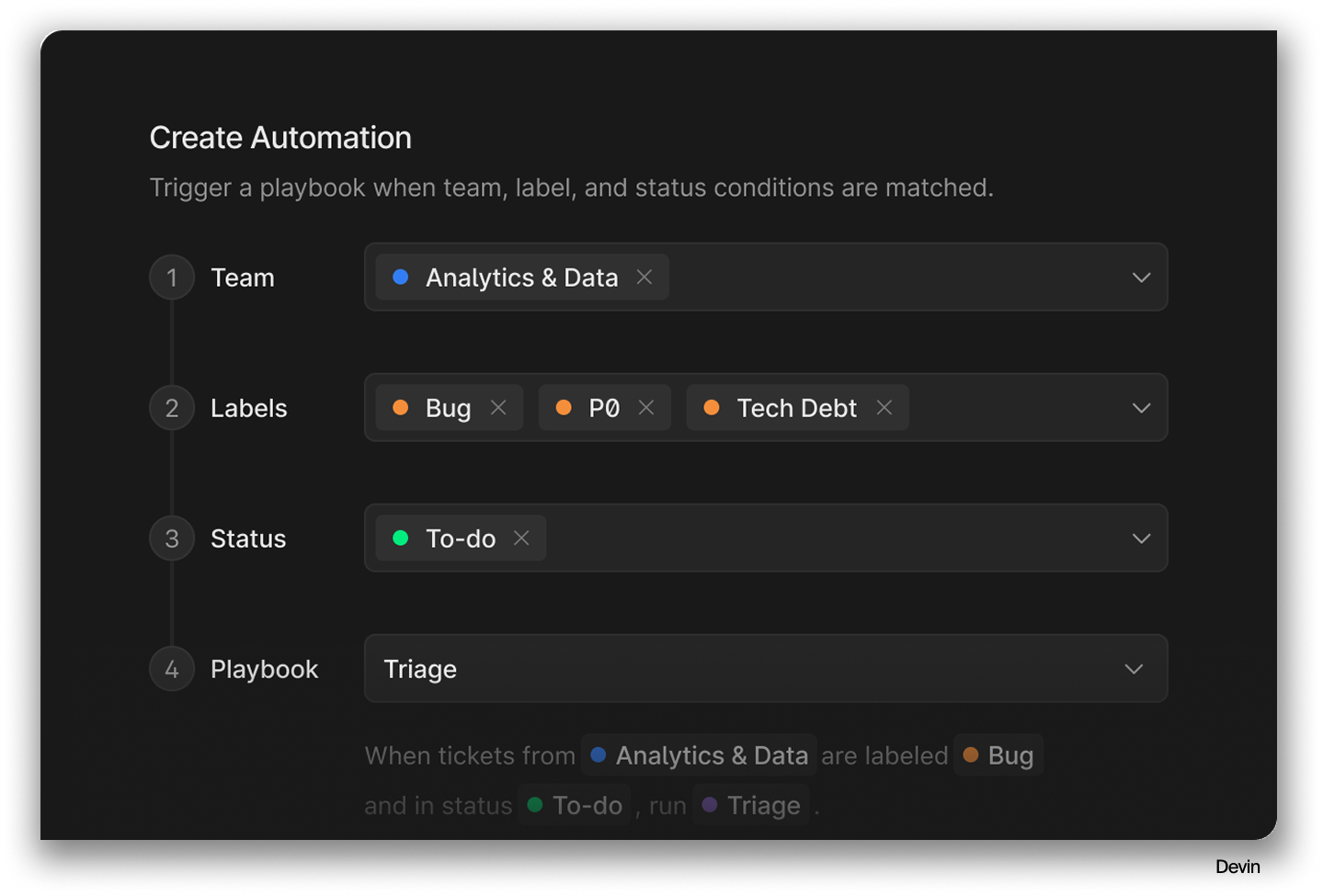
Cognition’s Devin, for example, allows developers to delegate engineering work and review the resulting pull request. Cognition’s guidance emphasises that engineers using Devin should adhere to detailed requirements, and follow their guidelines for testing and reviewing of the output. The economic question is consequently broader than whether the system can generate code. It is whether the engineering work it returns is useful enough to justify the combined cost of execution, supervision and correction. A fast result that requires extensive rework may create less value than a narrower task completed reliably. Cognition
This makes the customer’s remaining workload a central product measure. Delegation delivers value when the effort of specifying, supervising and checking the work is sufficiently smaller than the effort of doing it. Product teams must therefore design the whole relationship. How people communicate objectives, which decisions the system makes, when it asks for help and how results are accepted.
AX gives these decisions a common focus and forces teams to ask what responsibility the product can assume while making the customer’s work materially easier.
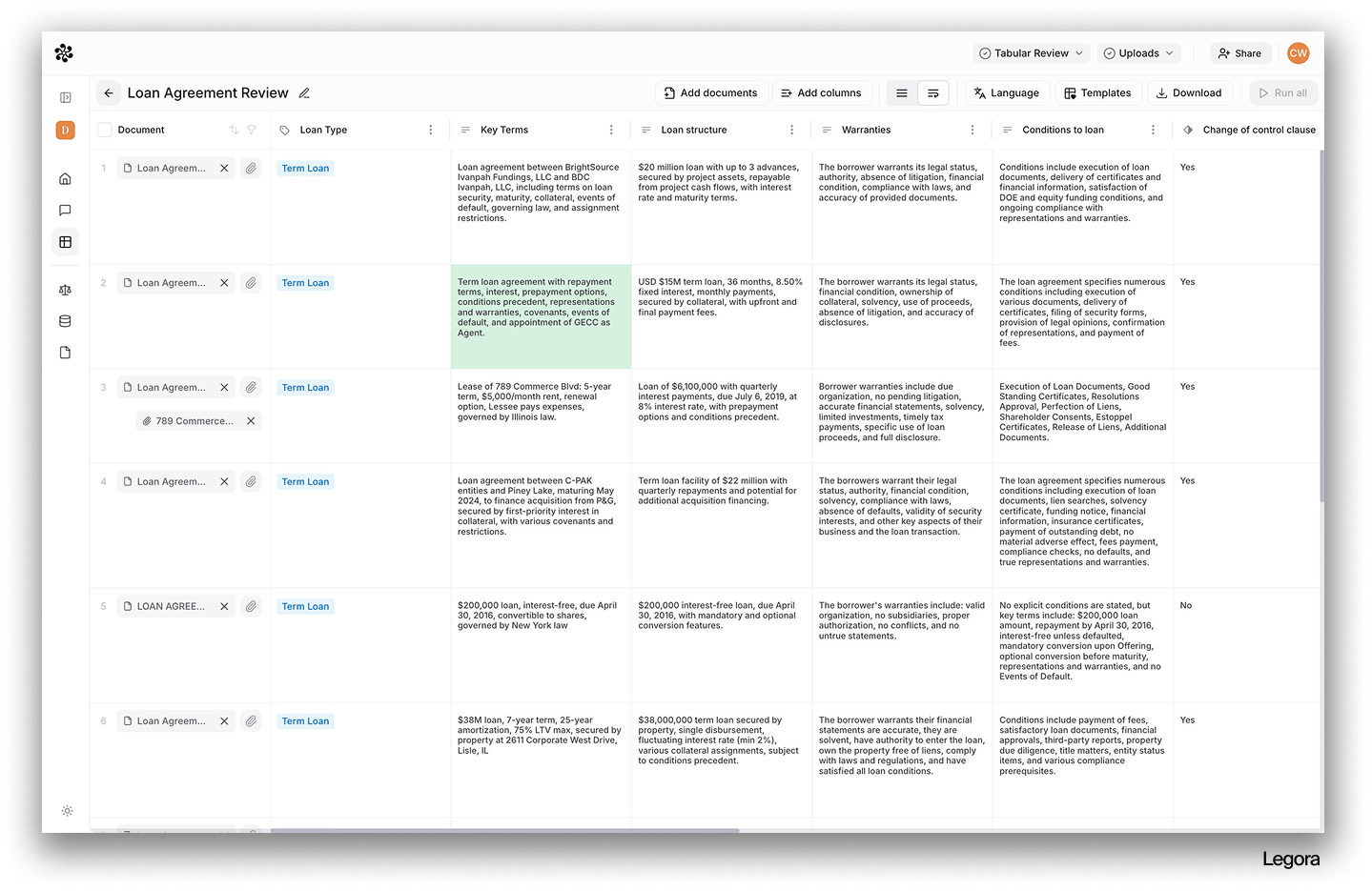
Different products will draw that boundary differently. Legora connects legal research, drafting and review while keeping lawyers in control of the resulting work. Its proposition accommodates a division in which execution can be delegated while professional judgement remains human. Retaining review does not diminish the product’s value if it concentrates a lawyer’s attention on decisions that require expertise. The appropriate level of agency is the one that produces useful work with an acceptable burden of oversight. Legora, Legora
Cash on delivery
As products assume more of the work, the unit customers pay for can change. Sierra makes this explicit through outcome based pricing for its customer service agents, with agreed criteria for results such as resolved support enquiries.

It also recognises that some interactions suit consumption based or blended pricing. The broader implication is that revenue can become more closely tied to successful execution. Defining completion, deciding when escalation is necessary and establishing evidence of success become part of both the experience and the commercial agreement. Sierra
This creates an important tension. The customer may pay for an outcome, while the provider incurs costs throughout the attempt to produce it. Models, computation, external tools, retries and human intervention all contribute to delivery cost. Software has always had operating costs, but agentic execution makes the amount of work required for each result especially important. Growth in usage or revenue does not, by itself, establish an attractive business. Leaders need to understand the cost of a successfully completed task, including failures and exceptions, and how that cost changes as the product takes on more demanding work.
AX decisions therefore affect margins directly. Clearer instructions can reduce wasted execution. Better context can prevent avoidable errors. An approval checkpoint can stop an expensive mistake, while excessive checkpoints can erase the benefit of delegation. Model selection, permissions and human review belong in the same economic assessment. The objective is to deliver a valuable result at a cost the customer and provider can sustain.
The intelligence moat
When companies acquire model capability from external providers, they must determine what they themselves contribute that customers cannot easily obtain elsewhere. That value can sit in proprietary context, specialised workflows, integrations and the reliability with which the product completes work. Dust illustrates this combination by bringing company knowledge, connected tools and multiple models together with permissions and activity monitoring. Its distinction between what an agent can access and who can use it makes authority part of the product’s working architecture. Dust
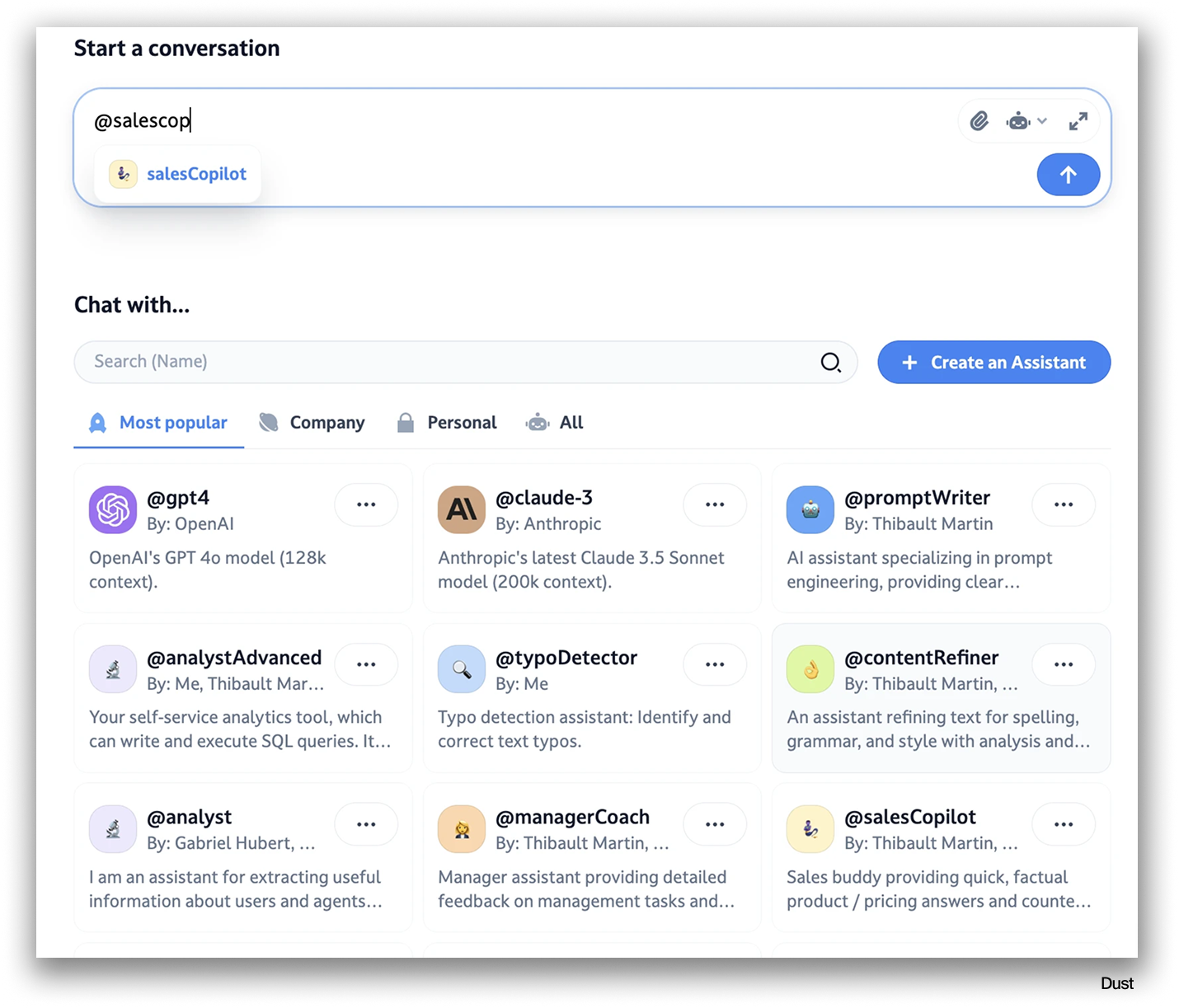
These capabilities have an economic purpose. Relevant context reduces the effort needed to explain a task. Reliable integrations allow the system to execute it. Permissions and monitoring make it possible for an organisation to authorise consequential work. Together, they can increase the scope of work a customer is willing to delegate and reduce the cost of delivering it. Governance consequently becomes part of productive capability: it establishes the conditions under which the system can be trusted with more responsibility.
For product leaders, this changes how architecture should be evaluated. A model improvement matters when it produces better results, lowers delivery costs or enables useful new responsibilities. A connection to another system matters when it removes a handover or makes a task possible. Technical investment should be tied to the work the product promises to complete. That is how available intelligence becomes a differentiated business.
Outcomes over process
The same reasoning applies inside the organisation. Many existing workflows reflect the limitations of earlier software: employees transfer information, reconcile records and coordinate steps across disconnected systems. Automating those activities can improve productivity, but it can also preserve work whose original justification is disappearing. If several handovers exist because systems cannot share context, leaders should examine whether those handovers are still needed before investing in making each one faster.
The opportunity is to reorganise around the outcome, retaining people where their judgement contributes most and delegating execution where the system performs reliably. Chatbase offers a modest but concrete example of how a focused AI application company can assemble external capabilities around its own product.
Stripe reports that Chatbase reached $10 million ARR in March 2026 with 26 employees, and that external billing infrastructure helped it avoid creating a dedicated billing team. This does not demonstrate an autonomous company. It shows how choices about what to own and what to acquire can support revenue scale without reproducing every function internally. Stripe’s Chatbase case study
Established software businesses must also examine whether their commercial incentives fit this new division of labour. If revenue depends on the number of people operating a product, reducing the need for those operators can create a conflict. If the business charges for outcomes, it must be able to measure and deliver them economically. Product strategy, pricing, staffing and operational accountability need to evolve together. Adding agentic capability without addressing these relationships leaves the underlying business only partly adapted.
Re/designing business
The economic significance of the AX Shift is that software companies can assume a greater share of the work for which customers currently supply the labour. That expands what they can sell, but also what they must deliver. Value depends on understanding the customers’ needs and the effort removed; profitability depends on the cost of reliable execution, competitive advantage depends on capabilities that make the product worth trusting with the task. These are the connected consequences of the same transfer of responsibility.
Product leaders must decide which work their products will take responsibility for and re/design their businesses to fulfil that commitment. The Big Boom supplies more intelligence and more software. Turning that abundance into a durable business requires a coherent relationship between customer value, delegated authority and delivery economics. That is the leadership challenge of the AX Shift.